

Reckless Retrospectives: Anthrax vs. MTV
An incident involving an infamous music video & what artists can learn from it.

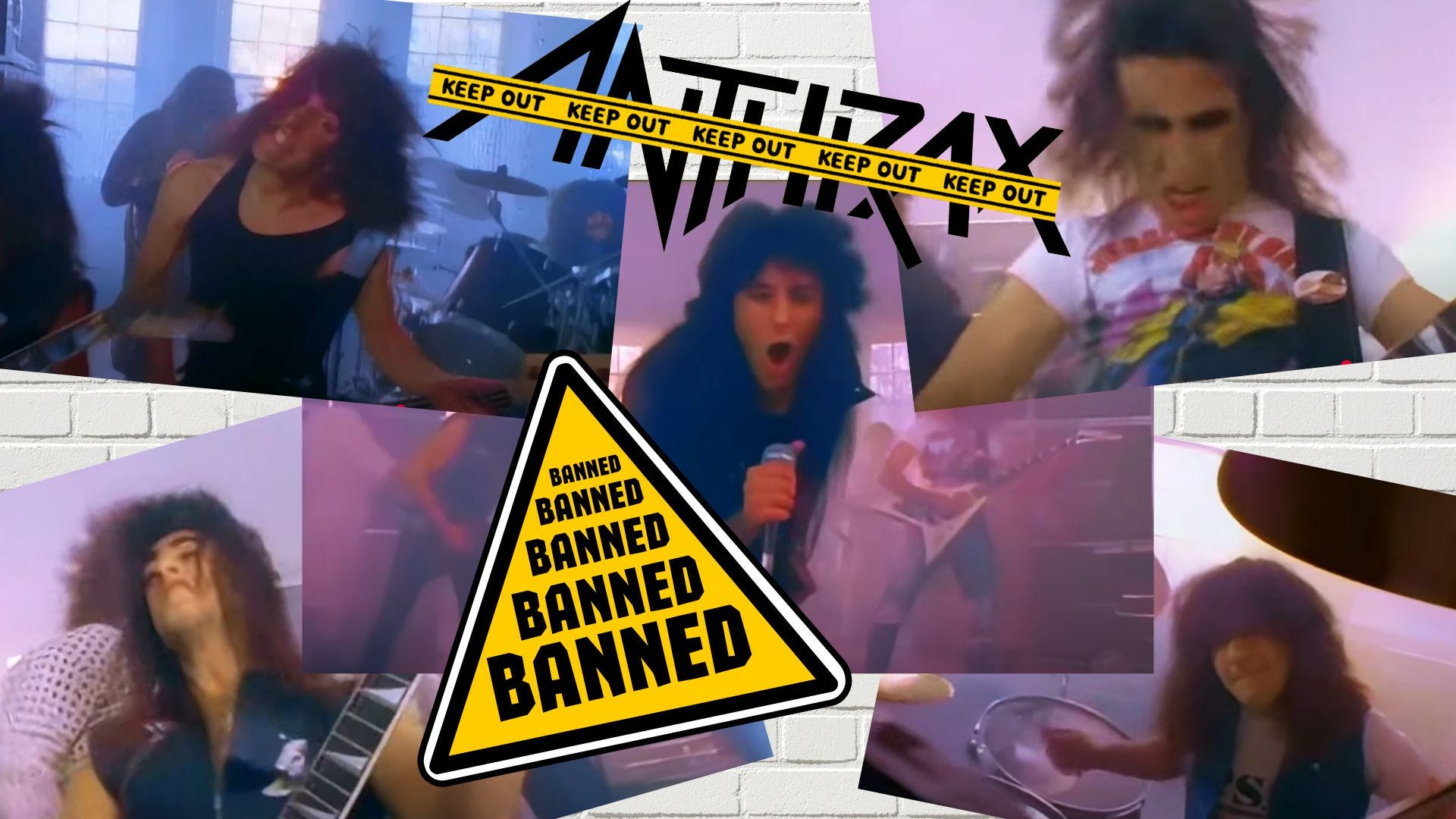
Welcome to the first installment of “Reckless Retrospectives,” a series that looks at some of the most rebellious artists of the past, the moments that defined them, and what artists of today can learn from them.
If you’re a budding creator struggling to grow a damn spine, then this series will be especially useful for you.
Here, we look back at an incident involving heavy metal pioneers Anthrax and their infamous showdown with MTV.
Formed in New York City in 1981 by rhythm guitarist Scott Ian and bassist Dan Lilker, Anthrax helped birth thrash metal, a heavy metal subgenre that fused the heaviness of hard rock with the raw speed of punk rock. Along with Metallica, Slayer, and Megadeth, they are considered part of the “Big Four” of thrash metal, influencing countless bands in their wake. Anthrax has even flirted with rap throughout its career (heard on their 1987 single “I’m the Man” and even more famously in 1991 when they collaborated with Public Enemy to cover their song, “Bring the Noise”), paving the way for rap metal and nu metal. The band has featured numerous lineups over the years but continues recording and performing today.
A Banned Band - When Anthrax Turned Rejection Into a Metal Badge of Honor
Anthrax released their debut album, Fistful of Metal, in 1984, but it was their sophomore effort – 1985’s Spreading the Disease – that really saw the band come into their own. Regarded as a classic in the thrash metal genre, the album was a major creative leap forward for the band and even saw them get a bit of mainstream success when it landed on the U.S. Billboard 200.
Anthrax even made a music video for the album’s single, “Madhouse,” which featured the band playing in a mental institution with several patients rocking out to their wicked tuneage.
Making it on to MTV after only a few years together would’ve been a major boost in the band’s career. However, the network wasn’t exactly thrilled with the music video’s content. Ian told Metal Hammer that:
“It was submitted to MTV, which was a bit of a long shot anyway for a band named ‘Anthrax’ and playing the music we played. And MTV came back to us and very politely said, ‘We will never air this. You are banned from MTV, because we feel that you are making fun of the mentally impaired.’ We were like, ‘What?!’”
Did MTV only want nice, toothless heavy metal bands to feature on their channel?
Any other band would’ve gone back to the drawing board and submitted a more sanitized music video if meant getting screentime on the massively popular network.
But not Anthrax. In true metal fashion, they gave MTV the middle finger and embraced the rejection. Ian continues:
“We were like, ‘Fuck MTV anyway! Who needs this shit?! This was before Headbangers Ball became a thing in the 80s. We were very excited about it. I think the label put out a press release saying we were officially banned from MTV. Of course, that gets people excited.”
Besides making fans even more dedicated to the band with their anti-establishment stance, the controversy proved how out of touch MTV was at the time, underestimating how popular heavy metal really was – within just two years of rejecting the band, the network launched Headbanger’s Ball, featuring music videos and interviews with both mainstream and independent heavy metal bands, including Armored Saint, Helloween, Megadeth, Grim Reaper, Pantera, Metallica, and yes, Anthrax.
In another conciliatory gesture, MTV even held a contest in 1989 in which a lucky “winner” had their home trashed by Anthrax.
Reckless Lessons
Even if you don’t dig Anthrax’s music, there’s plenty to learn from this incident that may help you in your creative endeavors.
Don’t just get used to rejection – wear it like a badge of honor
Every artist will have to deal with rejection at some point, and most of us will get rejected far more often than we’re accepted.
But you must learn to treat rejections like accomplishments – you’ve just discovered who your work wasn’t made for.
Keep working at your craft, keep putting your work out there, and don’t waste time on those who don’t like what you’re making.
Stay true to your vision
Anthrax’s music has evolved and gone in various directions over the years and decades, but one thing they’ve never done is dilute their hard-hittin’ music just for a chance at mainstream success.
In fact, a big part of their appeal is their commitment to doing what they want, not what others want.
As you progress in your creative career, you’ll probably receive lucrative offers contingent on you sacrificing part of your style or substance.
Just say no.
Even if you have to decline some success in the immediate future, you’ll never truly succeed if you only do so by turning into a bastardized, gutless version of who you really are.
Controversy isn’t always a bad thing
As Scott Ian mentioned in the interview, Anthrax actually put it out into the world that MTV banned them, and that it only made their fans fall in love with them even more.
On its surface, getting rejected by such a massive network is a major failure, not something to be proud of. But because MTV was mostly highlighting glossy Top 40 musical artists at the time, Anthrax was smart by telling the world “we’re the band MTV doesn’t want you to know about!”
Who rebellious headbanger at the time could resist a marketing push like that?
Controversy is very often the death knell for many artists, but if you ever find yourself in public trouble, capitalize on it! Use it to your advantage and give your reputation a dangerous edge.
Mainstream success isn’t always a good thing
Had Anthrax taken MTV’s criticism to heart, they would’ve given them a more “mainstream” music video, and they probably would’ve experienced far bigger record sales as a result.
But that success could’ve gotten to their head, making them believe that making music that’s a little more clean and radio-friendly is the better direction for the band.
Fuck that.
The more mainstream success one achieves, the greater the pressure to deliver work that will appeal to a wider audience, which generally means sacrificing your originality and edge to make it more palatable.
You’ve got a vision that only you can breathe life into – preserve it no matter what, even if it means never becoming an A-lister.
Don’t adapt to the status quo – make the status quo adapt to you
MTV may have said “no” to Anthrax because they thought their music video was too offensive in 1985, but times changed and it would only be about two years later in 1987 that the network realized that heavy metal was more than a passing fad, eventually featuring the banned band on heavy rotation.
Anthrax didn’t water down their music, their image, or their style to appease MTV. They stayed true to their vision, helping to popularize the burgeoning thrash metal genre even more, proving to the network that the fanbase was worth tapping into.
Tastes evolve all the time, but don’t let that deter you from pursuing your idea. If you produce work that merely emulates what’s popular right now, don’t expect it to last, even if you achieve some success in the short term.
No, keep cultivating your style, regardless of how much it goes against what the masses want. What’s considered weird and “out there” today may become the next big thing tomorrow, and if you hold the line, you may one day go down as the progenitor of that new style or genre.